Alina Sosnina on building brand stories that resonate
Alina Sosnina is a brand and content strategist who creates brands that feel human, intentional, and culturally relevant. With a background across creative agencies, tech, social impact, and finance, she has worked with a range of organisations to craft brand stories and identities that move. Her work focuses on bringing clarity to complexity, helping brands make sharper decisions, build strong foundations, and find a voice that actually resonates.
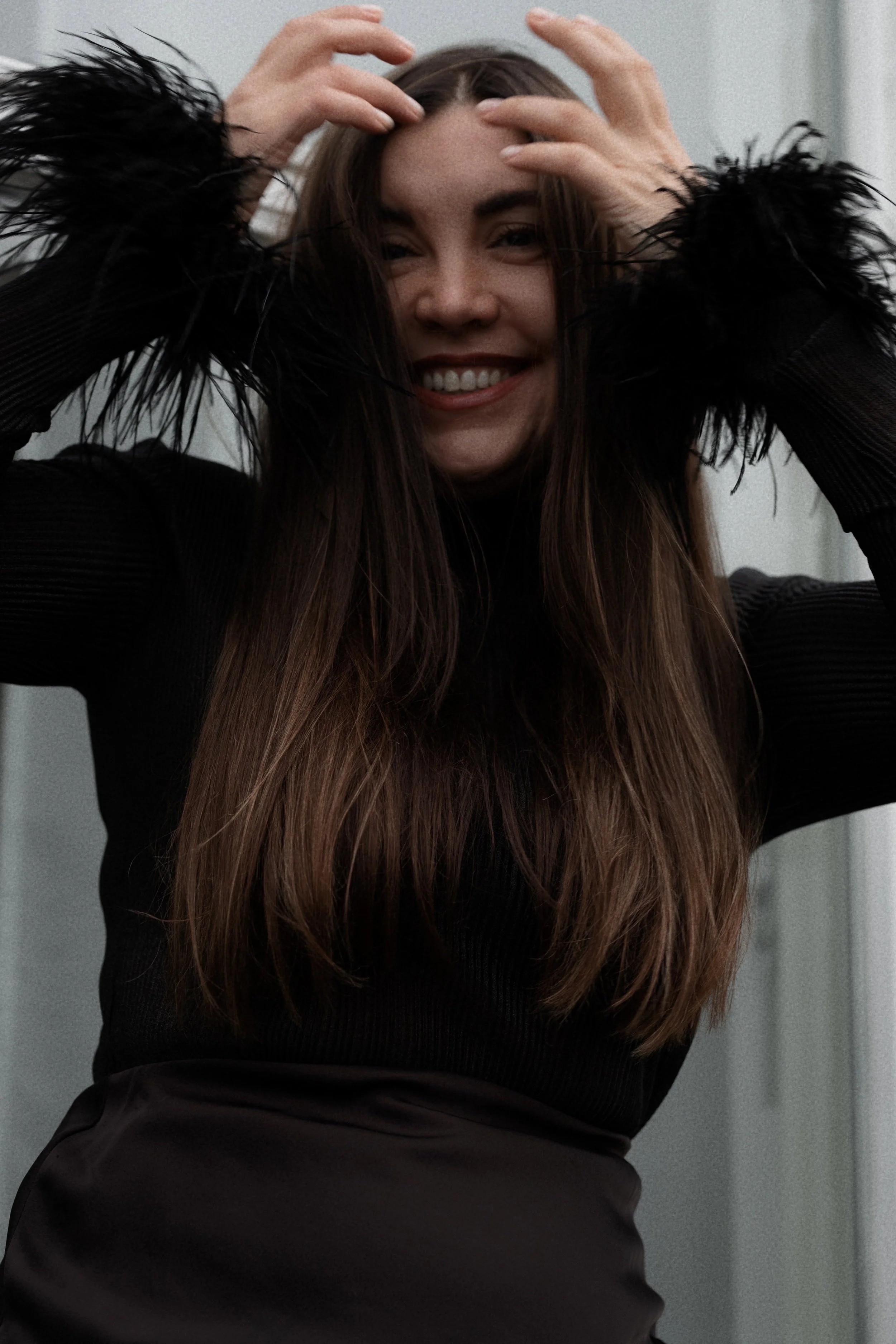
Photography Catarina Inácio
“Through Your Favorite, I began creating a world where different paths could exist”
Your work creates space for conversations around creative careers that often remain informal or invisible. When was the moment when you realised that strategy could be a tool for creative independence, not just for business growth?
It clicked for me when I realised I was looking for answers that simply weren’t out there.
At the time, I was trying to figure out how to shape my own path. But there wasn’t really a space where you could explore that openly. I felt too creative for a corporate role, but not “cool kid” enough for a traditional agency. Always somewhere in between, without a clear place to land. Creative careers were either romanticised or reduced to very fixed roles. There was no real space for nuance.
So I started building that space for myself.
Through Your Favorite, I began creating a world where different paths could exist next to each other, where I could highlight talent, show how people actually move, think, and build, and at the same time position my own work as a creative and strategist. That’s when I started to understand what strategy really is.
It’s not just a business tool. It’s a way to create clarity around who you are, what you do, and where you’re going, and to make sure that stays clear and intentional.
That’s where it shifted for me. Strategy became less about growth, and more about independence.
Many creatives/entrepreneurs are taught how to make work, but not how to position it. What made you step into that space as a strategist?
Honestly, because no one was really doing it in a way that felt honest or accessible.
Creative education teaches you how to make, but not how to monetize what you make. You learn skills, but not positioning. Expression, but not direction.
I stepped into strategy almost out of necessity. I wanted to understand why some work travels further, why some people get seen, and others don’t. And once you start seeing those patterns, you can’t unsee them. It shifts from “how do I grow a brand?” to something more fundamental: how do people become understood?
I studied International Business, but I was always drawn to the creative side - marketing, branding, storytelling. Working across agencies, startups, and scale-ups, I started recognizing what actually makes brands work. At the same time, I saw how differently creatives were being educated: super strong in craft, but often missing the tools to position, communicate, and sustain their work.
That gap is really where I stepped in.
Through Your Favorite, you’re building a knowledge hub for creative careers. What kinds of conversations did you feel were missing when you were finding your own direction?
The conversations I was missing were the deeper ones, especially around career paths, identity, and culture.
Not just what someone does, but how they got there. What shaped their decisions, what they struggled with, what they doubted, and how their identity and cultural background influenced the path they chose.
But also something very practical and accessible. I was looking for something that a younger version of me could understand. Something that makes you think: ah, this is what it actually means to be a strategist, or this is what it takes to be an entrepreneur or photographer.
With Your Favorite, I was very intentional about keeping it niche. It’s not just about your story, it’s about your path. The ins and outs of a specific career, how it actually works, what it requires, what it looks like day to day.
Do you see strategy as a way for creatives to claim ownership over their careers rather than adapt to existing structures?
Yes, 100%
I see strategy as a way for creatives to take back control over how they position themselves, rather than constantly adapting to structures that were never really built for them.
Without strategy, it’s easy to fall into reacting, taking opportunities as they come, adjusting your work to fit expectations, or following paths that don’t fully align. With strategy, you start making intentional choices. You define what you stand for, what you want to be known for, and where you’re going.
It shifts you from fitting into existing systems to shaping your own direction.
For me, that’s where ownership comes in. Not just over your work, but over your narrative, your positioning, and ultimately your career.
How does your cultural perspective influence the way you approach storytelling and brand positioning today?
It plays a big role in how I see and build brands today.
I grew up between cultures, born in Saint Petersburg and moving to the Netherlands as a kid. Saint Petersburg shaped that cultural intelligence early on. The architecture, the museums, the ballet - it’s a city where culture is part of your everyday surroundings. That stays with you.
Then in the Netherlands, I was surrounded by people from all kinds of backgrounds. Different perspectives, ways of communicating, ways of seeing the world. I was kind of cherrypicking - taking pieces of all of it and making it my own. It felt natural, especially having so many international friends.
It made me feel culturally rich, but also very aware that people can experience the same thing in completely different ways.
That naturally shaped a more inclusive way of thinking. It still shows up in how I approach storytelling and brand positioning.
I don’t see brands as one thing. I see them as cultural expressions. The way something is said, the references it uses, the tone it carries - it always comes from somewhere. And because I’ve always seen multiple perspectives at the same time, I naturally build with that in mind - making sure what’s created can resonate across different worlds, not just one.
How do you balance supporting other creatives in shaping their direction while continuing to define your own?
For me, they’re not separate things, they actually feed into each other.
Working with other creatives sharpens how I think. You start to see patterns, different ways people approach their work, where they get stuck, what makes something click. That constantly challenges and refines my own perspective.
At the same time, I’m very aware that I can’t lose myself in other people’s direction or dream. I need to stay close to my own work, my own voice, and what I’m building. So it’s a balance between giving and protecting. I can support someone in shaping their direction, but I’m not stepping into it. I’m there to bring clarity, not to take over.
And I think that’s what keeps it healthy. By helping others articulate their path, I’m also continuously defining my own.
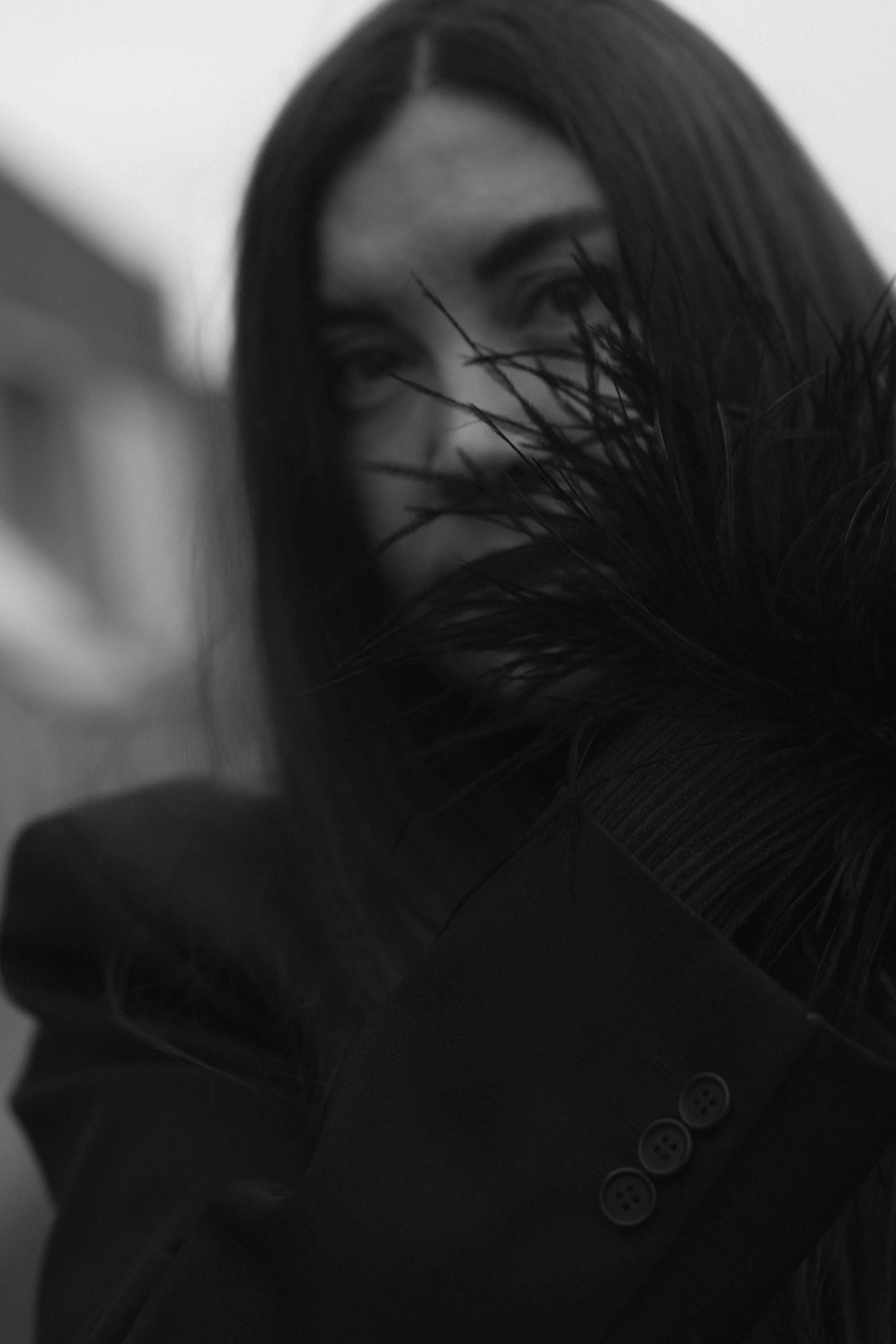
Photography Catarina Irácio
“I’m very aware that I can’t lose myself in other people’s direction or dream”
How has moving between different environments shaped your eye and the kinds of stories you feel compelled to tell through images today?
Working across agencies, startups, scale-ups, and corporates, I was constantly switching contexts. Each space has its own pace, its own way of thinking, its own visual language.
At agencies, everything is more conceptual and idea-driven. In startups and scale-ups, it’s faster, more experimental, more about building while moving. And in corporates, there’s a different level of structure, consistency, and scale.
Being in all of those environments trained me to see differently. You start to notice what works where, what resonates with who, and how context changes everything, from storytelling to visuals to tone. That’s also shaped the kind of stories I’m drawn to.
I’m less interested in surface-level visuals, and more in what sits underneath. The nuance, the intention, the reason why something looks or feels a certain way.
Because for me, a strong image or story isn’t just about how it looks. It’s about whether it actually lands in the environment it’s created for.
What do you think traditional creative education still doesn’t prepare people for when entering the industry today?
Traditional creative education prepares you really well to make, but not to monetize.
You learn how to create, how to think conceptually, how to develop your craft. But once you step into the industry, you realise that’s only one part of it.
There’s very little focus on the business side of things. How to price it, position it, communicate it, and make sure it reaches the right people. It also doesn’t really prepare you for the reality of the different environments you might enter, like agency, startup, scale-up, corporate. Each comes with its own dynamics, expectations, and pace.
And maybe most importantly, it doesn’t teach you how to make decisions about your own direction. You’re trained to respond to briefs, not to define your own. That’s where a lot of creatives get stuck.
Because talent isn’t the issue. It’s the gap between making something valuable and knowing how to make that value visible, and paid.
What kinds of conversations between creative women do you think still need more space right now?
Financial conversations, for sure.
How to monetize your craft, how to build a business around what you do, how to actually make it sustainable. That’s still missing, or kept too vague.
Because the reality is, if you don’t understand that side, your craft will stay a hobby, and you don’t want to stay broke!
There’s a lot of focus on inspiration, aesthetics, and support, which is important, but much less on how to turn your work into something that can support you long term.
For me, studying business made that very clear. It gave me the understanding that being creative isn’t enough on its own, you also need to understand how business works if you want to build something sustainable.
So I think we need more open, honest conversations about money, pricing, negotiating, and building something that stands on its own.
Not just how it looks, but how it works.
What kind of knowledge or tools do you hope Your Favorite will leave behind for the next generation of creatives?
Clarity, mainly.
Not in the sense of giving people step-by-step answers, but helping them understand how to think. How to position themselves, how to make decisions, how to build something that actually fits them.
A lot of creatives don’t lack talent, they lack structure. Or language for what they’re doing. And once you have that, things start to shift. You can explain your work better, you can make sharper choices, you can move with more intention.
I also hope it leaves behind a more honest picture of what building a creative career actually looks like. Not just the outcome, but the process, the shifts, the moments of doubt, the pivots.
If someone can come across Your Favorite and feel like, “okay, I see more possibilities now, and I know how to start shaping my own,” then that’s enough.
What do you hope becomes easier for the next generation of creative women because of the work you’re building today?
I hope it becomes easier for them to take themselves seriously earlier.
To see what they do not just as a passion, but as something that can stand on its own, and to understand how to build around it.
I hope they don’t have to figure everything out alone. That there’s more transparency around how things actually work, how to position yourself, how to monetize your craft, how to navigate different environments, and how to make decisions about your own direction.
And especially for creative women, I hope it becomes easier to talk about money, ownership, and ambition without hesitation.
To build something on their own terms, without feeling like they have to fit into existing structures or wait for validation.
If that part becomes more normal, more visible, and more accessible, then a lot of things will shift naturally.
What kind of conversations between creative women do you think still need more space right now when it comes to building sustainable careers and equal opportunities?
The conversations that go beyond inspiration and really get into how things actually work.
Especially around money. How to monetize your craft, how to price your work, how to negotiate, and how to build something that can sustain you long term. Those conversations are still too vague or kept behind closed doors. But also ownership. What it really means to build something on your own terms, how to take up space, and how to make decisions that aren’t based on fitting into existing expectations. At the same time, there’s still not enough openness around access. Who gets opportunities, how networks work, how visibility is built, and how transparent (or not) things like pay and hiring actually are. Equal opportunity isn’t just about talent, it’s also about access and awareness.
“There’s still not enough openness around access”.
And I think there’s still space for more honesty around the in-between stages. Not just the wins, but the uncertainty, the pivots, the moments where things don’t work out.
Also, normalizing that it’s okay to have two jobs. A corporate role and your own thing next to it. Building something takes time, and not everything has to look perfect or fully established from the outside. Right now, a lot of it is very image-driven. People want to look like they’ve “made it,” especially on platforms like Instagram, but you rarely see how they’re actually getting there.
I’d love to see more openness around decision-making too. Less overthinking, more clarity on how people actually choose a direction, commit to it, and move. Because that’s often the difference between staying stuck and building something real.